20 October 2026
Responding to the HKSAR Government’s commitment to position Hong Kong as an international education hub, The Hang Seng University of Hong Kong (HSUHK) announces the launch of the inaugural HSUHK International Doctoral Education Hub Index (Hong Kong), the first in a planned annual survey series seeks to provide evidence on how international doctoral talent perceive Hong Kong as a study destination and the factors influencing their decisions to study, work, and settle there.
The launch comes at a time when Hong Kong is advancing its ambitions to become an international hub for higher education, research, innovation, and talent development, as reflected in recent policy discussions surrounding talent attraction, the development of higher education, and the city’s long-term innovation strategy. Against this backdrop, the Index aims to contribute evidence that can support informed discussion on doctoral education and talent development.
The inaugural survey was conducted between August and September 2026, receiving around 300 responses from aspiring and current doctoral students, as well as recent doctoral graduates. Respondents represented 18 countries or regions across Asia, Africa, Europe, North America, and Oceania.
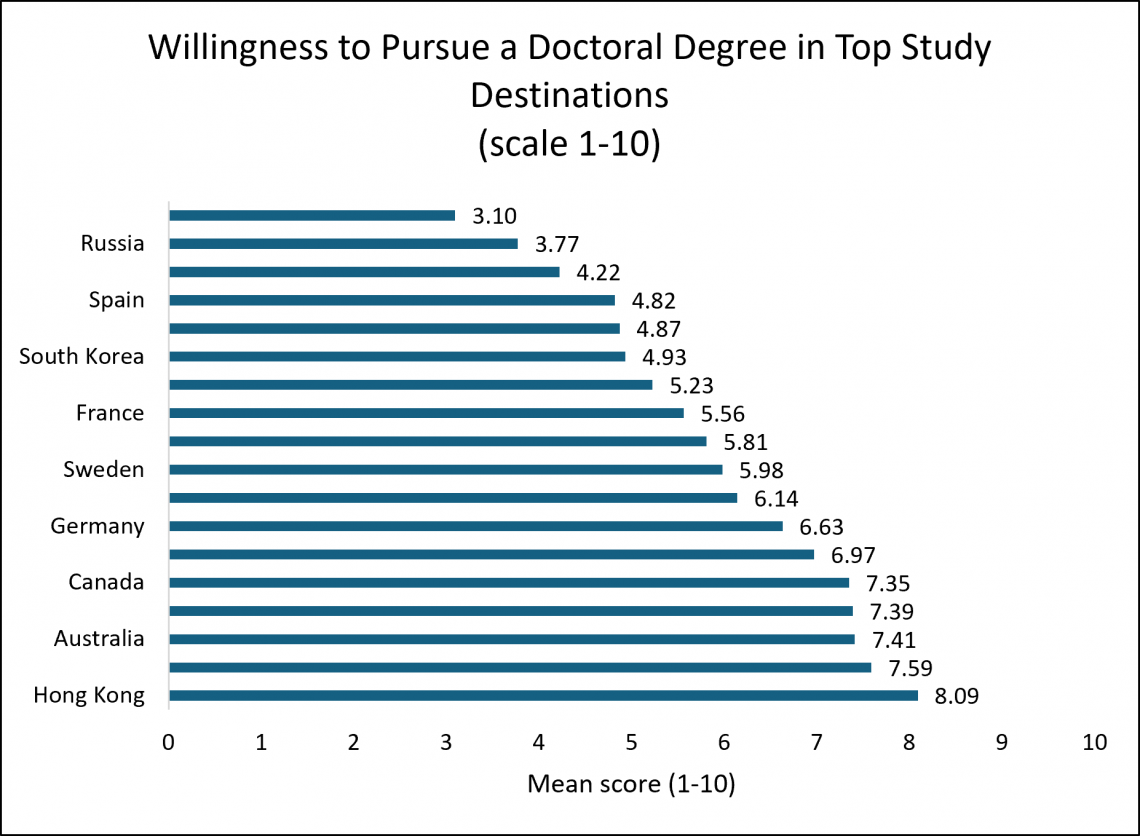
The findings suggest that Hong Kong is viewed favourably by respondents as a preferred destination for doctoral study. Among the 18 study destinations evaluated, Hong Kong recorded the highest average rating as a preferred destination for doctoral study (8.09 out of 10) and was the only destination to achieve a median score of 9. More than 72% of respondents rated Hong Kong between 8 and 10, indicating a generally positive perception among survey participants (see Figure 1 below).
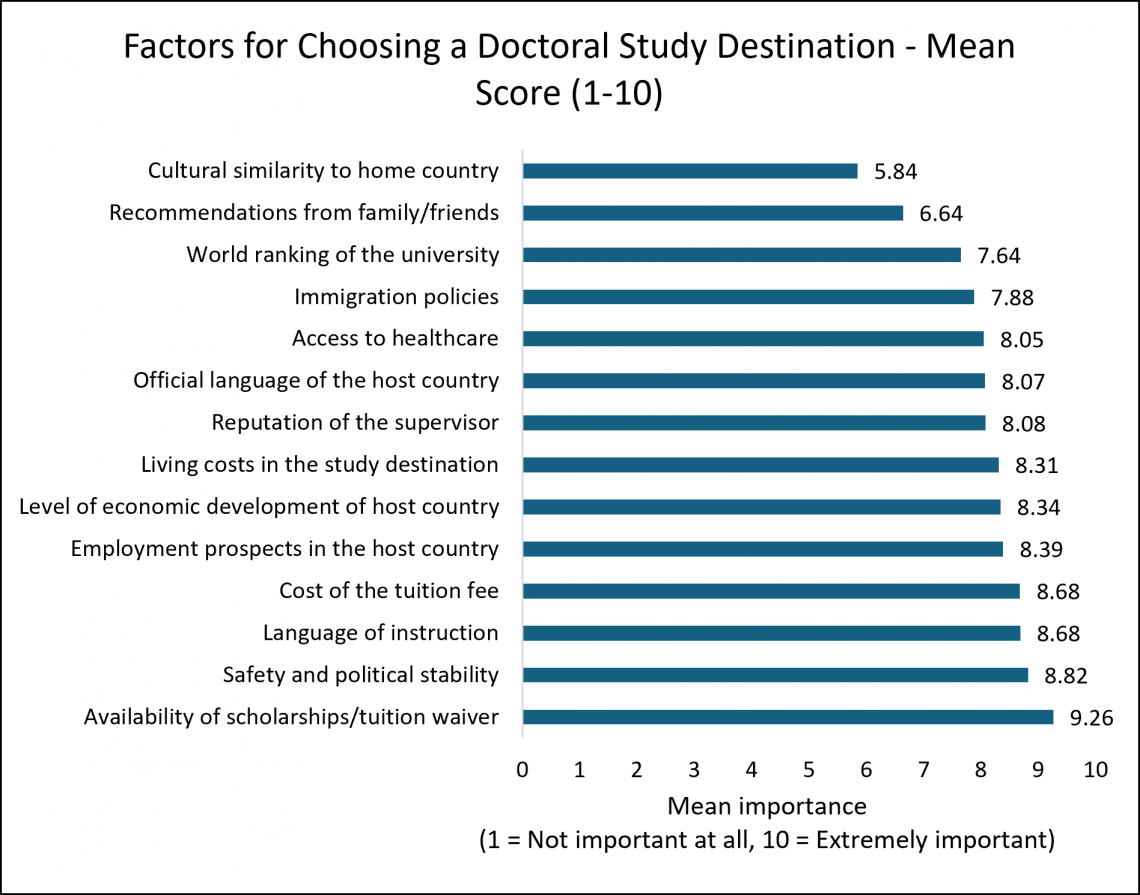
The survey also sheds light on what matters most to prospective and current doctoral students. Respondents rated scholarships and tuition support (9.26/10) as the most important factor influencing destination choice, followed by safety and political stability (8.82/10), language of instruction and tuition affordability (both scoring 8.68/10), and employment prospects (8.39/10). These findings suggest that financial support, quality of life, and future career opportunities remain central considerations in international doctoral mobility decisions (see Figure 2).
At the same time, respondents identified several challenges associated with doctoral study. Career prospects after graduation (8.07/10), financial difficulties (7.83/10), and housing affordability (7.17/10) emerged as some of the most significant concerns. These findings highlight the importance of looking beyond student recruitment and considering the broader conditions that shape doctoral students’ experiences and long-term settlement decisions.
The survey further found that 93.3% of respondents expressed at least some willingness to remain in their host destination after completing their doctoral study, including nearly three-quarters reported being very or extremely willing to stay. Although stated intentions do not necessarily translate into future behaviour, the findings suggest the importance of providing attractive career pathways, research opportunities, and supportive living environments if destinations hope to retain highly skilled doctoral graduates.
Professor Joshua Mok Ka-ho, President of HSUHK and Principal Investigator of the study, noted that attracting doctoral talent is only one part of a broader talent development strategy. Sustained competitiveness will depend not only on scholarships and university reputation, but also on the availability of meaningful career opportunities, strong research ecosystems, affordable living conditions, and supportive environments for long-term professional development. A family-friendliness environment is also critical to attract and retain for global talent for work and future development.
Professor Mok said, “As the first edition of a planned annual initiative, the HSUHK International Doctoral Education Hub Index (Hong Kong) establishes a baseline for tracking changes over time in doctoral students’ preferences for Hong Kong as a study destination. The 2026 study will set a baseline index of 100. Future surveys will continue to monitor emerging trends and contribute evidence to discussions on higher education, talent attraction, research development, innovation, and the global competition for highly skilled talent. The analysis of data generated from the study will help inform public policymaking in Hong Kong.” Professor Mok added that the team plans to extend the index to major cities in Chinese Mainland and other parts of Asia in the future.
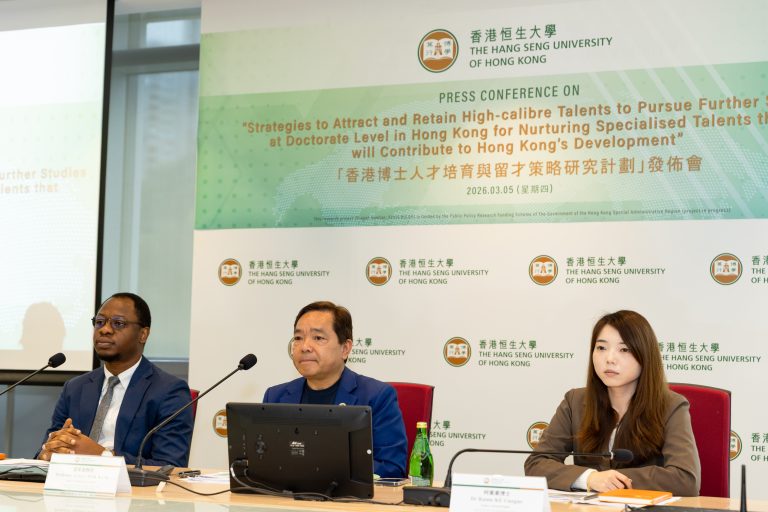
The study is part of the project “Strategies to Attract and Retain High-calibre Talents to Pursue Further Studies at Doctorate Level in Hong Kong for Nurturing Specialised Talents that will Contribute to Hong Kong’s Development” and is funded by the HKSAR Government’s Public Policy Research Funding Scheme.
Disclaimer: The findings presented in the HSUHK International Doctoral Education Hub Index (Hong Kong) are based on research conducted by the project team and the views of survey respondents. The views, interpretations, and conclusions expressed in this article do not necessarily represent the views, policies, or positions of the Government of the Hong Kong Special Administrative Region.